graphic_eqTinnitus: Understanding, Habituation & Sound Therapy
A comprehensive clinical guide to managing tinnitus, acoustic hair cell excitability, sound masking, and habituation in Bristol.
Tinnitus is the perception of sound (ringing, buzzing, hissing, humming, whooshing, or pulsing) when there is no external acoustic source. Over 7 million adults in the UK (approx. 1 in 7) experience tinnitus.
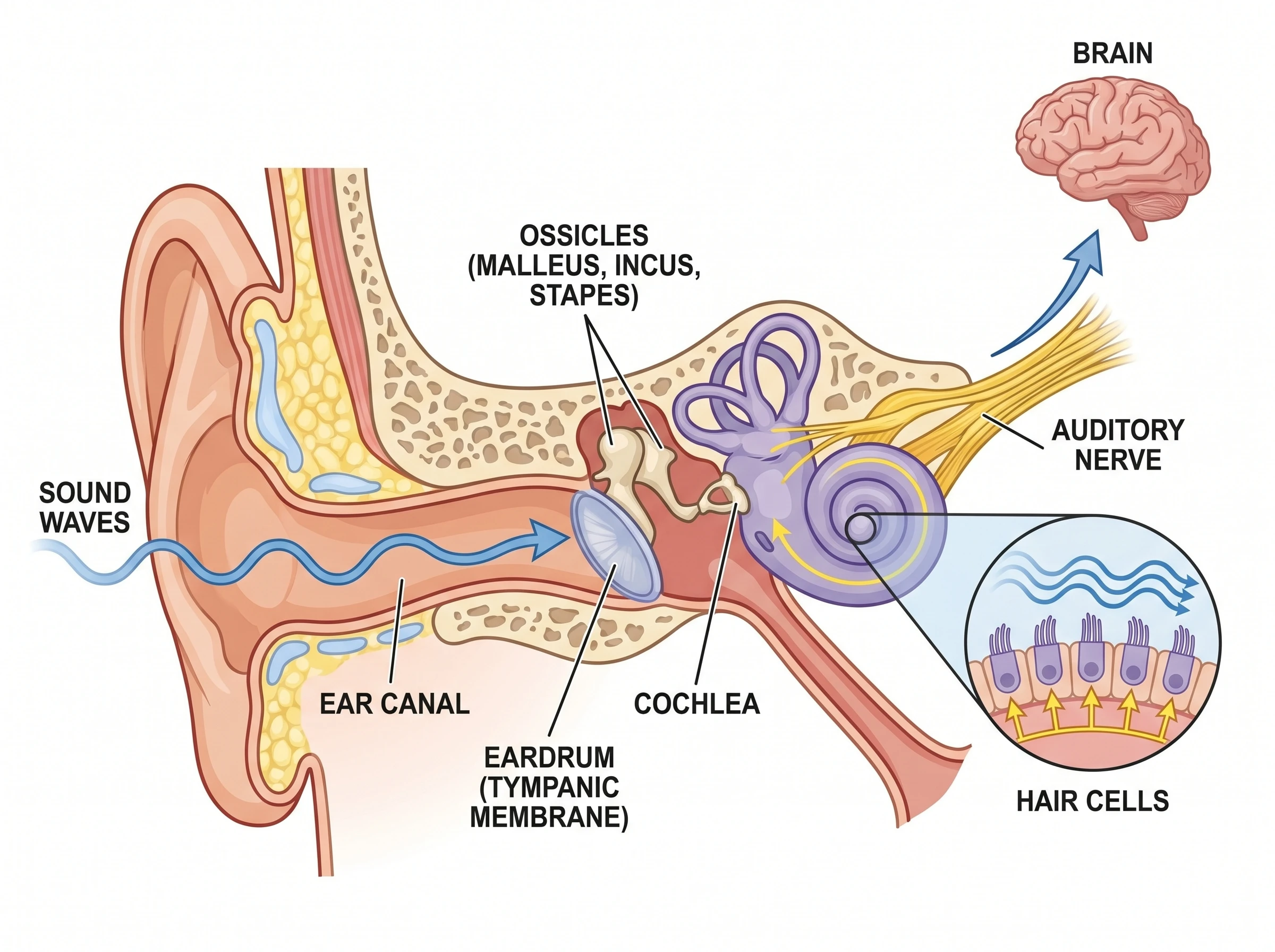
When sensory hair cells in the cochlea are damaged or under-stimulated, the brain's auditory cortex turns up its internal gain volume, generating phantom signals that the auditory system interprets as sound.
Clinical timeline showing how perception transitions from acute distress to subconscious habituation:
Clinical efficacy percentages of NHS-approved tinnitus management interventions:
Reduces auditory perception in quiet rooms & bedtime.
Re-introduces ambient background sounds to override tinnitus.
Reduces autonomic nervous system arousal and stress.
Limiting high caffeine, salt & maintaining consistent sleep.
Watch clinical educational presentations and sound therapy demonstrations directly on-site:
Using sound generators, white/pink noise, or ocean soundscapes to enrich background acoustics so tinnitus is less prominent.
Amplifying everyday ambient environmental sounds reduces the relative volume of internal tinnitus signals.
Re-classifying the tinnitus sound in the limbic system from a threat to a neutral background signal.
All clinical definitions, habituation models, and sound therapy data on this page have been tested and verified against authoritative UK healthcare bodies: