campaignHearing Loss Awareness (PACE Framework)
Practical hearing loss awareness tips, communication strategies, and advice for friends, family, and colleagues in Bristol.
Developed from Lived Experience
Bristol Hearing Loss Initiative Lived Experience Toolkit
Our initiative created PACE as an easy, memorable framework for friends, family, colleagues, and employers to communicate effectively with hard-of-hearing (HoH) individuals:
- P: Patience
- A: Attention
- C: Clarity
- E: Eye Contact
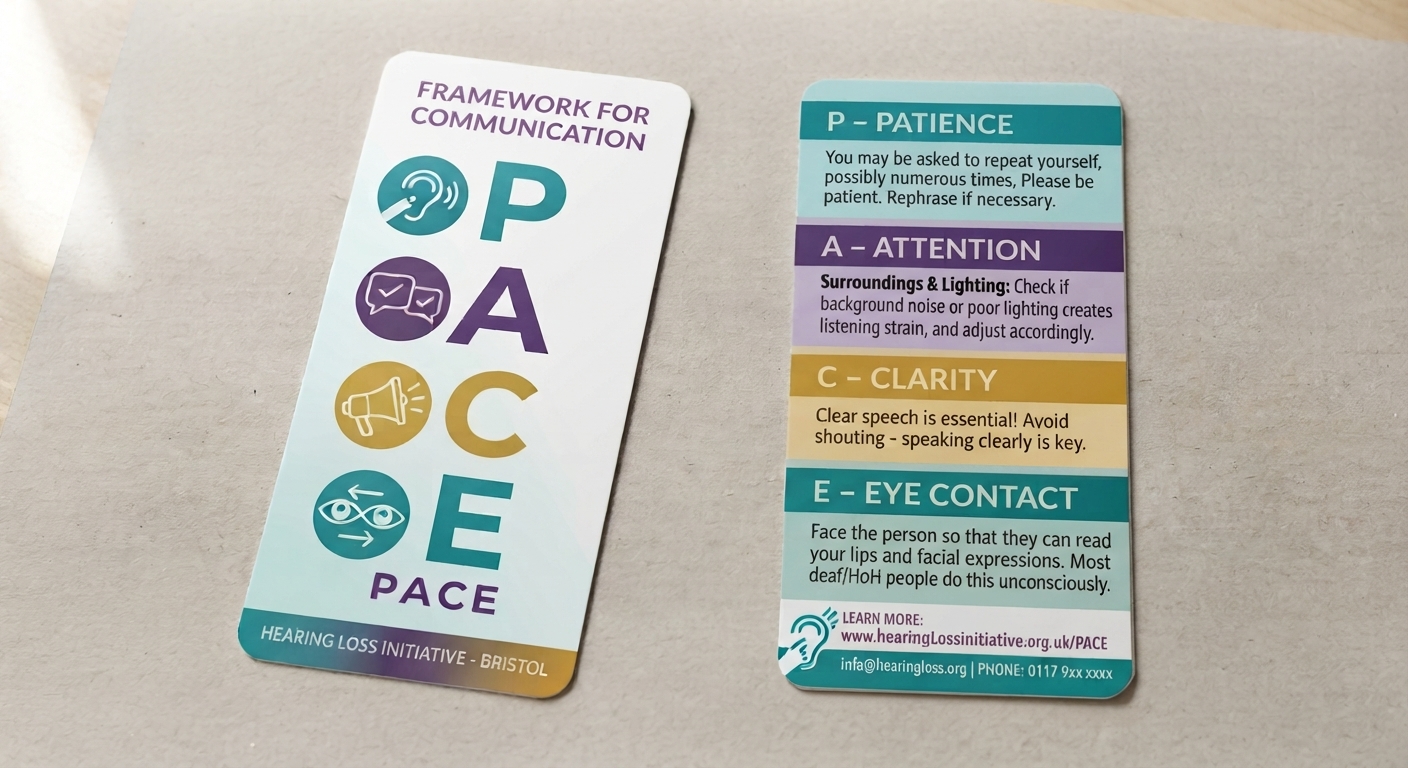
These four core principles capture the key communication tactics recommended by leading UK audiology charities and accessibility standards.
You may be asked to repeat yourself, possibly numerous times. Please be patient. Rephrase if necessary.
- Give people time to process what you have said before repeating or moving on.
- Rephrase your sentence using different words if the message is not coming through.
- Stay calm and supportive, focus on mutual understanding, never frustration.
Pay close attention to the environment and the individual. Ask if you need to adjust the surroundings to reduce background noise or improve lighting. Confirm they caught key details without putting them on the spot. Keep alternative methods in mind. Options like written notes, live smartphone captions, or basic signing exist as useful backup tools when verbal communication breaks down.
- Surroundings & Lighting: Check if background noise or poor lighting creates listening strain, and adjust accordingly.
- Confirm Discreetly: Check understanding gently without causing embarrassment or putting them on the spot.
- Backup Methods: Be ready with written notes, live mobile captions, or simple gestures if speech is hard to follow.
Clear speech is essential! Avoid shouting, speaking clearly is key.
- Speak at a natural pace with clear but not exaggerated lip movements.
- Shouting distorts sound, muffles vocal tones, and alters mouth shapes needed for lipreading.
- Use plain language and concise phrasing; rephrase if a specific word is missed.
Face the person so that they can read your lips and facial expressions. Most hard-of-hearing (HoH) people do this unconsciously.
- Face the person directly so they can see your mouth and facial expressions, avoid looking away or turning your back.
- Keep your mouth and face visible (no hands, cups, pens, or documents blocking your lips).
- Position yourself in good lighting so your face is clearly illuminated without shadows.
You can encourage people to:
- Remember PACE before any important conversation: “Patience, Attention, Clarity, Eye Contact.”
- Use PACE at home, at work, in social spaces, and in services like shops, cafés, clinics and schools.
- Share PACE with friends, colleagues and family as a simple way to become more hearing loss aware.