Testing Tomorrow’s Sound

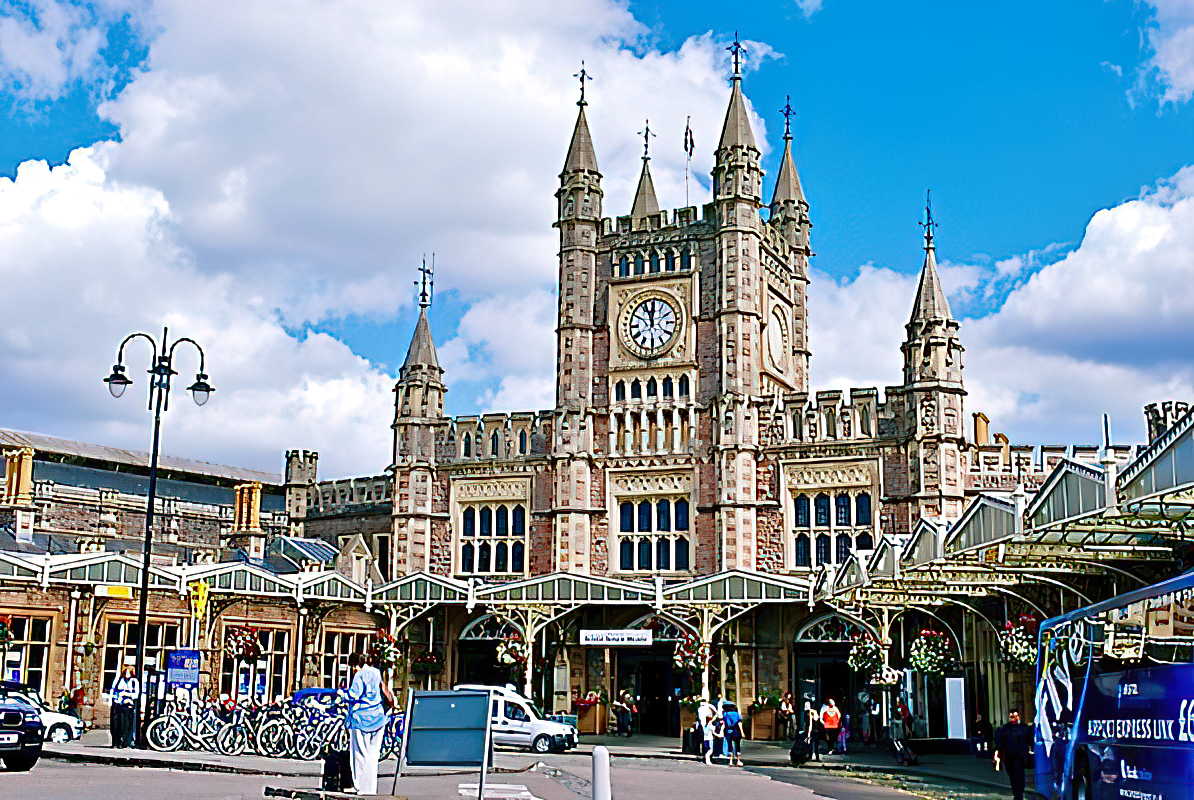
The Auracast Trial at Bristol Temple Meads

September 2025 marked a major milestone for accessibility in our city, and I had the privilege of being right at the center of it. The session was expertly run by Jonathan Hoskin, Business Development Manager at Ampetronic Listen Technologies.

In partnership with Severnside Community Rail Partnership, I helped organise a visit to Bristol Temple Meads for a group from Centre for Deaf and Hard of Hearing People. Our mission? To test a groundbreaking new assistive listening technology called Auracast.

I knew that giving people with hearing loss the chance to experience this system firsthand—in a challenging, echo-heavy environment like a busy train station—would be an incredible opportunity. But getting the right hardware to test the system took a bit of behind-the-scenes maneuvering.

Sourcing the Right Tech

Before the trip, I reached out to Sarah Swift, the Head of Audiology at St Michael’s Hill. I was looking into upgrading my own hearing aids and wanted to know if I could get a pair equipped with this new Auracast technology through the NHS.

At the time, the technology was still in its infancy. Major providers like Phonak hadn't yet rolled out Auracast capabilities, and it certainly wasn't available on the NHS in the Bristol area. However, Sarah connected me with David from Danalogic, a manufacturer looking to implement Bluetooth LE Audio in their future models.

David came directly to the office. We sat down, calibrated a brand-new pair of Auracast-enabled Danalogic hearing aids, and set them up specifically for this trial. While they weren't yet officially supported by the local NHS trust, they were exactly what we needed to put the station's new system to the test.

The Engine Shed Briefing

Our day actually began at the Engine Shed, just at the front of Temple Meads. We gathered around a large table in the back room of their fantastic cafe for an introduction from the Ampetronic team.

To really appreciate the leap forward, we first needed to look back. The team had set up a small, traditional telecoil hearing loop on the table. Those of us with compatible hearing aids switched over to the loop program, and the limitations of the old technology were immediately obvious—as soon as you leaned away or moved outside the physical loop, the audio would frustratingly dip in and out.

Then, they switched on the Auracast system. The difference was night and day. The audio from the presenter’s microphone beamed directly into my ears. Even in that small room, the clarity was amazing. But the real test was waiting for us out in the echoey, chaotic environment of the station itself.

Into the Tunnels

After a quick break for tea and biscuits laid on by the team, we headed down into the main concourse with one of the engineers from Ampetronic. They pointed out the small transmitter boxes mounted on the walls as we made our way toward the platforms where the Auracast system was live.

There were about six or seven of us ready to explore Temple Meads. We had an amazing mix of tech ready to go: David and I were equipped with the Danalogic hearing aids, while the rest of the group used dedicated Auracast receiving devices that functioned like wireless headphones. With the Ampetronic team by our side and our devices synced up, we began our journey down through the station.

I still remember the exact moment it clicked for me. We were walking down into the tunnel that runs underneath the platforms at Bristol Temple Meads. Suddenly, the Auracast kicked in. It registered as a separate band on my hearing aids, and a station announcement began playing. It was crystal clear—exactly like listening to high-quality audio through connected Bluetooth headphones. There was no static, no interference, and absolutely no drop-off.

Seamless Audio Zones

As we moved through the station, the true power of the system revealed itself. The Auracast network is built on individual nodes, and as we walked from one zone to another, the system seamlessly handed us off, changing the audio stream to match our exact location.

Up on the platform, we walked in one direction and received clear, real-time notifications about the trains departing from that specific spot. When we walked further down the platform, we moved into a different broadcast zone. The audio shifted automatically, this time broadcasting travel and tourist information. (The test broadcast was giving us information about Barcelona, but it perfectly demonstrated how a station could provide Bristol-centric guides, venue suggestions, and onward travel information for arriving visitors).

The entire experience was remarkable. The technology worked flawlessly with the Danalogic hearing aids, integrating as simply as tapping just another feature inside the smartphone app.

A Life-Changing Revelation

But the most profound part of the day wasn't my own experience—it was watching the other members of our group. We had brought along regulars from our hard of hearing coffee mornings, many of whom are older and have vastly different profiles of hearing loss than I do.

For some of them, this was the first time in their entire lives that they had been able to clearly hear and understand a train station announcement. It was a deeply moving experience to witness how this technology could instantly strip away barriers.

I fully believe that a nationwide rollout of Auracast will be life-changing. It will enable people with hearing loss to navigate public transport independently, catching platform changes and safety alerts instantly rather than struggling to decipher muffled echoes over a loudspeaker. And because the technology allows for multiple broadcast bands, venues can offer dedicated channels for safety alerts alongside separate channels for local city information.

Leaving the Loop Behind

The coverage we experienced was exceptional, and it is vastly superior to traditional telecoil loops. From an infrastructure perspective, it should also be much easier for venues to install.

Crucially, Auracast eliminates the frustrating audio-visual lag you often get with current Wi-Fi or Bluetooth streaming in live venues. If you've ever tried to watch a live performance with a slight audio delay—where it feels like you're watching a badly dubbed movie from back in the day—you know how disorienting that millisecond gap can be. Auracast removes that entirely.

Looking to the Future

This trial at Temple Meads—and similar projects I've seen recently launching in places like Brighton—is just the beginning. I am fully behind this technology and plan to get much more involved. The team at Ampetronic has already offered to provide further demonstrations, and my goal is to bring them down to our local support groups so our wider community can experience exactly what this system can do.

Between the nationwide rollout of Auracast and the continuing evolution of AI within hearing aids, we are standing on the edge of a revolution. The coming years are going to dramatically transform the hearing experience, making everyday life more accessible, more connected, and a lot easier for millions of people.

← Back to Future Tech